The main differences between via ferratas and protected mountain trails.
Slovenian mountains offer exceptional opportunities for exploration, both for hikers and adrenaline seekers.Increasingly well-known and popular are ascents via protected mountain trails and climbs along via ferratas, which are becoming ever more attractive, especially in alpine regions. Although both activities share the same goal – overcoming demanding mountain terrain – they differ in difficulty, equipment, and the type of experience they offer. In this presentation, we will explore the main differences between them, and then focus on some examples from the Julian Alps, the Upper Sava Valley, and the western part of the Karavanke, where one can find outstanding routes and via ferratas for every taste.
History
Before diving into the technical details, let us first look at the history of via ferratas and protected climbing routes. The vast majority of mountaineers and the broader mountain community probably believe that the story began in Italy, specifically in the Dolomites, since the very term via ferrata (iron path) comes from the Italian understanding of protected routes. Unfortunately, this is not the case. The story of protected routes actually began in Austria, today’s mecca of sport via ferratas. In 1843, the first protected climbing route (a classic via ferrata) was established on the normal route to the Hoher Dachstein (2995 m), rising above Ramsau. Today, its south face is home to one of the longest and tallest alpine sport via ferratas – the Dachstein Super Ferrata (1200 m of elevation gain and 1850 m in length, graded D/E).
The greatest expansion of protected climbing routes began during the First World War, along the front lines in the Italian Dolomites, where mighty towers and peaks were equipped with iron aids to improve and facilitate logistics for the army. Today, many well-known tourist and sports centers (Arco–Riva del Garda, Canazei, Cortina d’Ampezzo, etc.) build their successful stories of mountaineering and tourism also on the development of these routes.
In Slovenia, the story of protected climbing routes began with the very first ascent of Triglav, when climbers secured a passage in the notorious chimney above Planika with a “komarča” (a log with cut branches). Later, in 1896, Jakob Aljaž had the route from Kredarica to the summit of Triglav secured, and thus Slovenians gained their own protected route. The route from Planika Hut (then Maria Theresa Hut) was under the management of the DÖAV (German-Austrian Alpine Club).
More developments followed:
- Between the two wars, Trentar Hanza and Borovec Kopiščar established routes in the north faces of Mala Mojstrovka and Prisank.
- At that time, two of the more difficult routes in the Julian Alps were also created: Via Italiana on Travnik and Kugy’s route on Montaž (today abandoned).
- The very first seriously protected climbing route (a classic via ferrata) in Slovenia appeared in the Kamnik–Savinja Alps. On daring Konj, near the more famous Rzenik, a route was equipped as early as the late 19th century – so our “Očak” (Triglav) does not hold the primacy.
- The most daring and magnificent route is the protected climbing path from Logarska Valley past Klemenča Jama Hut to Ojstrica, known as Kopinškova pot, which was established during the turbulent time of the Second World War.
Austria nevertheless took the leading role in the development of sport via ferratas, from where the idea spread to Slovenia. Today, there are many – from easy to difficult, from less attractive to spectacular ones. One such ferrata is located by the highest waterfall in Carinthia – the Falbach ferrata, graded E. Austria now has over 800 sport via ferratas, and Slovenia still has quite some work ahead to catch up – provided we even wish to.
Slovenia got its first sport via ferrata only in 2011, near the village of Vinska Gora, where the local Mountaineering Club (PD Vinska Gora), with the help of the Alpine Association of Slovenia’s technical team, equipped the wall of Gonžarjeva peč. For a long time, this route held the primacy as the hardest in Slovenia, graded D/E.
Four years later, the development continued at Jezersko, where, at the initiative of the late Davo Karničar, a sport via ferrata was established in a more alpine environment – in the north face of Ravenska Kočna, directly below Češka koča (Czech Hut), which also gave the ferrata its name.
Shortly after, Kranjska Gora also recognized the great potential of expanding its tourist offer, and in 2015 established the Mojstrana ferrata (Aljaž’s Route and the Mojstrana Squirrels’ Route), which is now certainly the most visited ferrata in Slovenia. It later added the Hvadnik, Jerm’n, and in 2022 also the Dobršnik ferrata.
Following these three leading destinations, more ferratas were created: Lisca, Boč, Otmarjeva, Spodnji Plot, and most recently Črna na Koroškem, where two years ago the currently longest and most difficult sport via ferrata in Slovenia was opened. The Olimpline Ferrata is graded F and leads to the top of an attractive zipline that can take visitors back into the valley.
Main Differences
Throughout the history of building these routes, we’ve seen that in the past there was a desire to reach even the hardest Alpine peaks. Since it was not possible to establish “normal” hiking routes to such summits, safety measures were added to make the ascents possible.
Iron rungs, rods, carved footholds, and even blasting (e.g., on Triglav) were used, and later steel cables were installed. These are classic alpine ascents, where the route is not secured with a continuous cable from start to finish, as is the case with sport via ferratas.
We can call them classic via ferratas, where only the most dangerous sections are secured. At the same time, one can also find unprotected dangerous spots along the way. Visiting such routes, besides requiring technical equipment, demands excellent preparation. Any carelessness can result in an accident.
Italians call them via ferrata, German speakers Klettersteig, English speakers also via ferrata, while in Slovenia we use the terms zavarovana pot (protected trail) or klasična ferata (classic via ferrata). Most users are often unaware that these are not sport via ferratas (fully protected from start to finish with a steel cable), but classic routes where unprotected sections still exist – and this often leads to difficulties and accidents.
So how can we best distinguish between sport via ferratas and protected mountain trails / classic via ferratas?
1. PURPOSE
- Sport via ferrata: Designed for sport climbing, usually requires more physical strength, skill, and climbing technique. Focus is on adrenaline and overcoming steep, difficult walls.
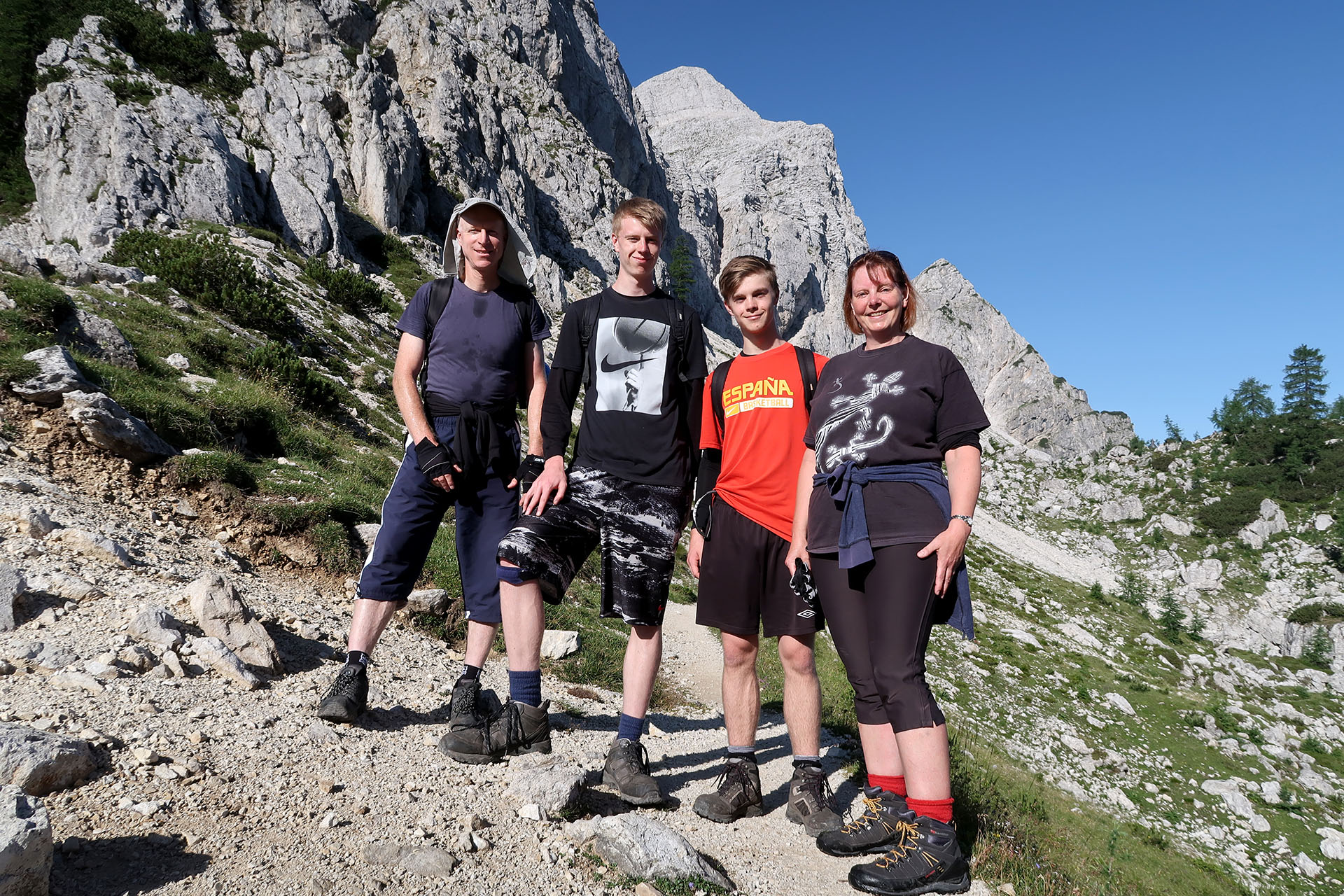
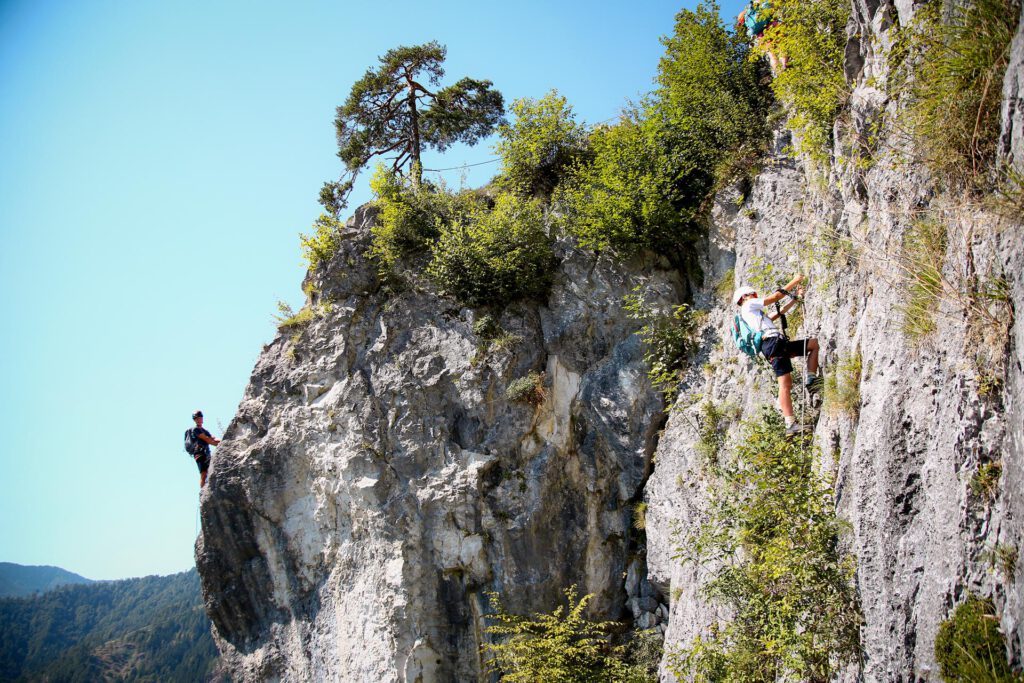
- Protected mountain trail / classic via ferrata: Designed for mountain hiking, with only certain exposed or difficult sections equipped with technical aids (steel cables, iron rungs, steps). The goal is to make mountain access easier.
2. EQUIPMENT
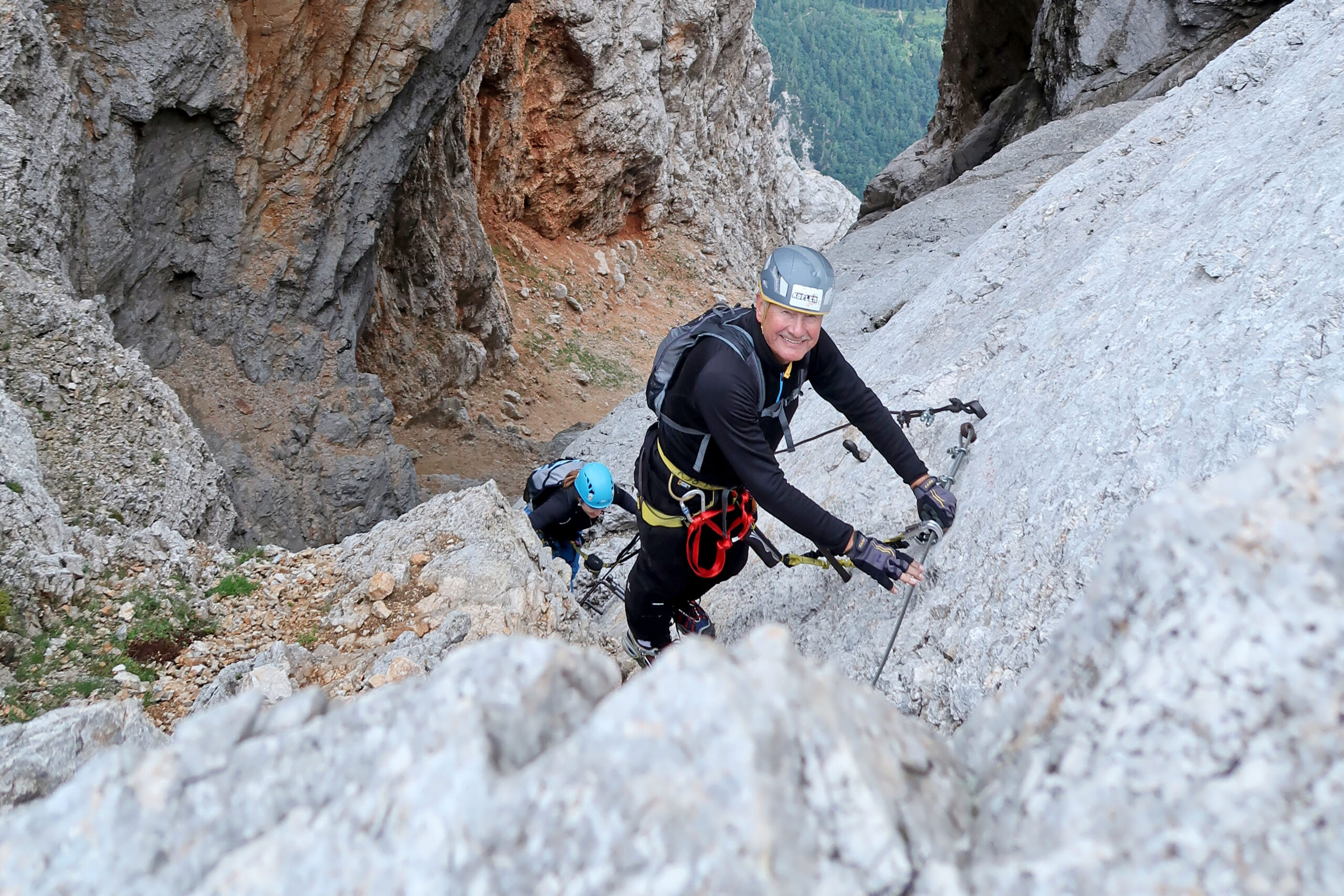
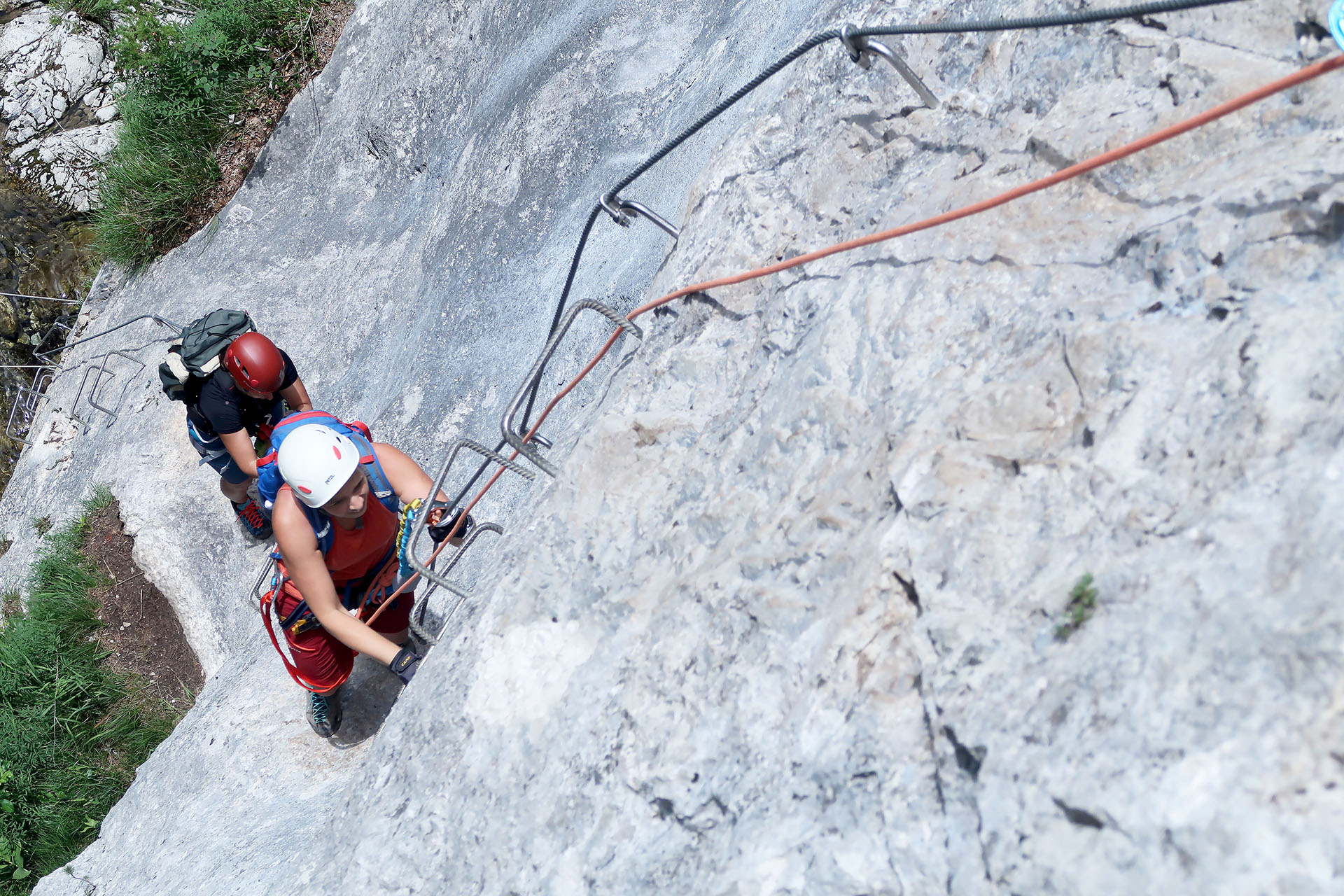
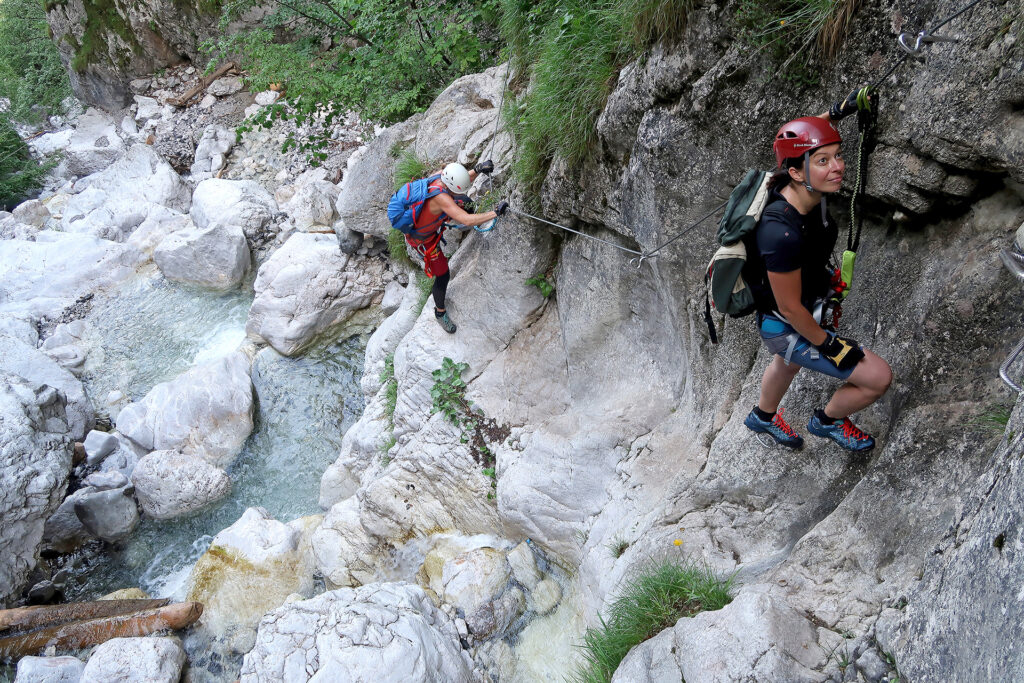
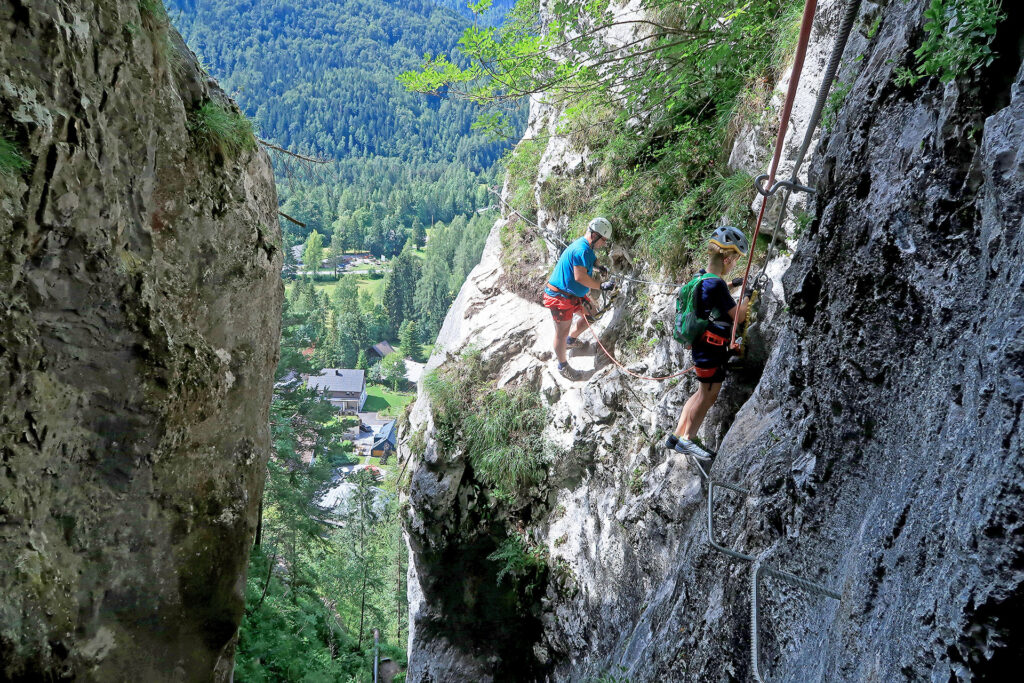
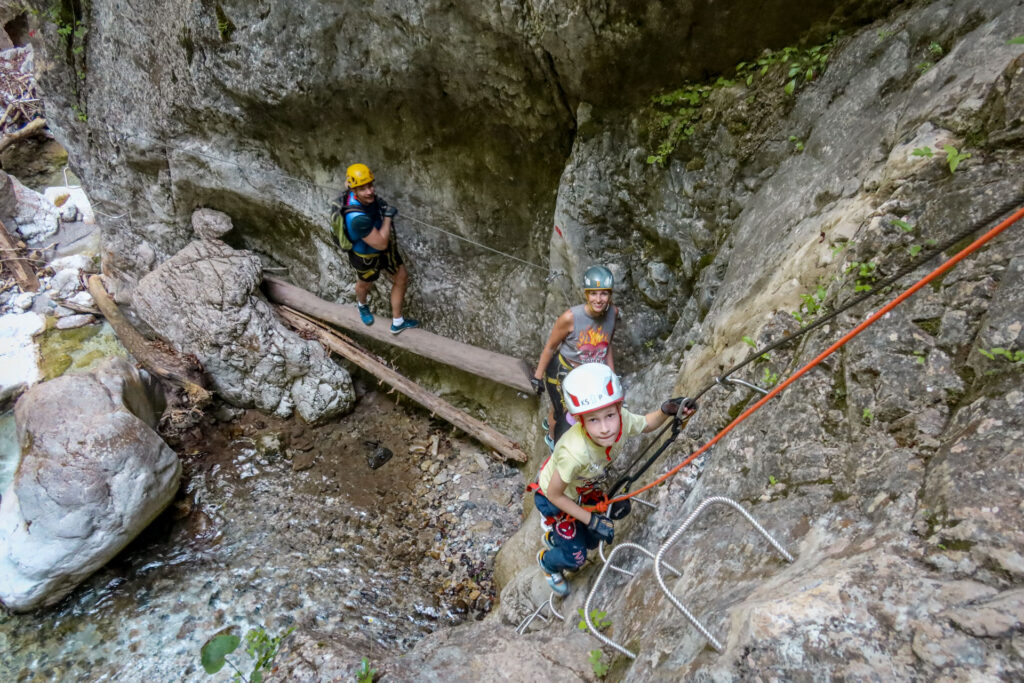
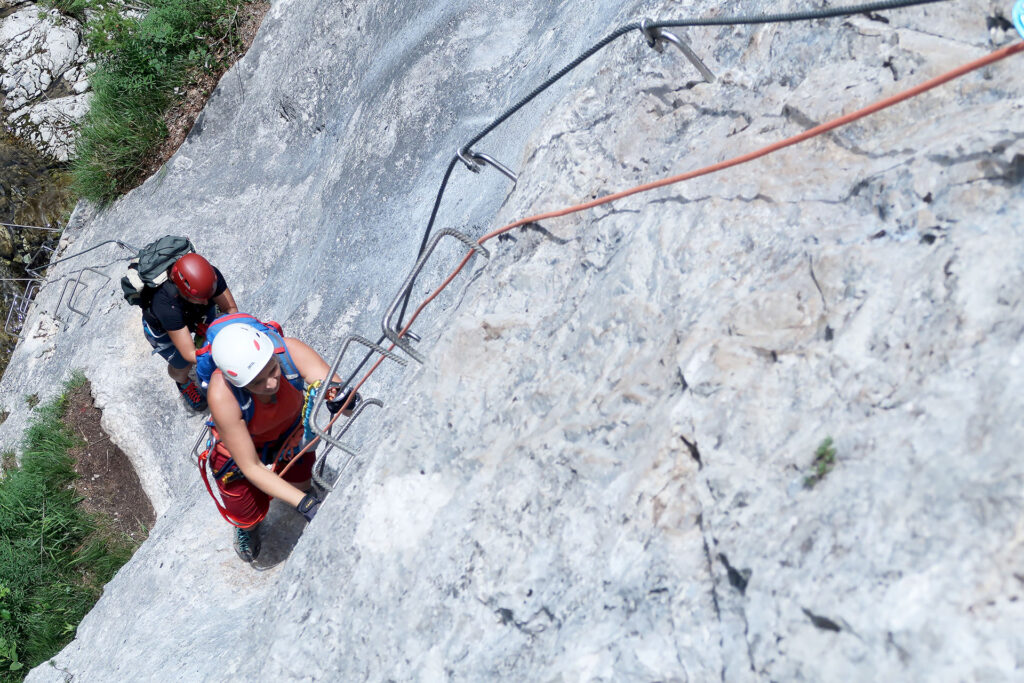
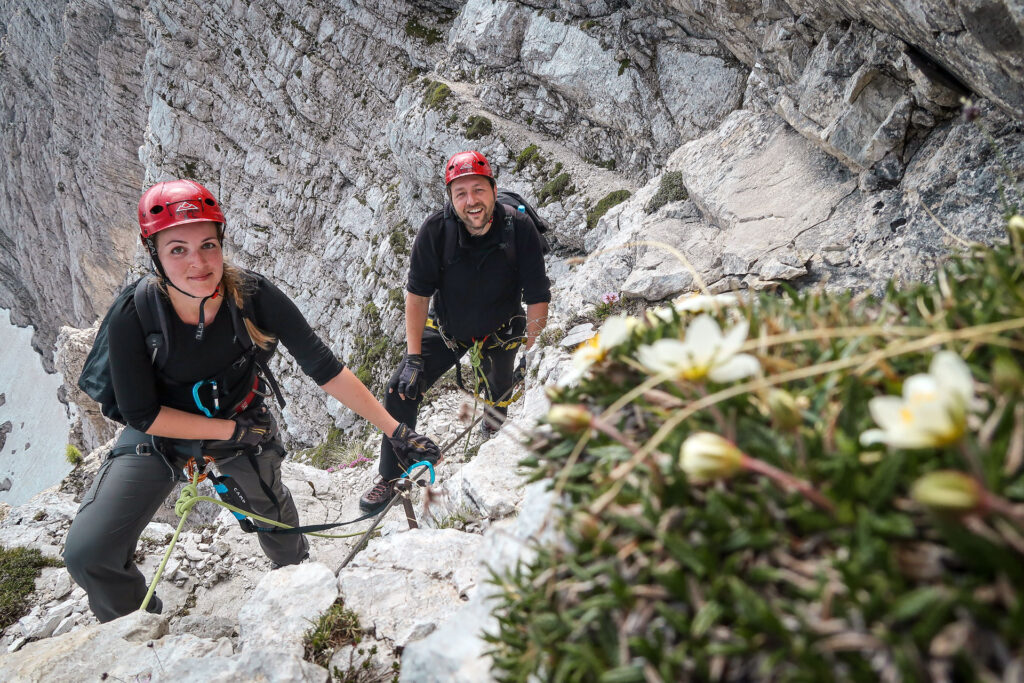
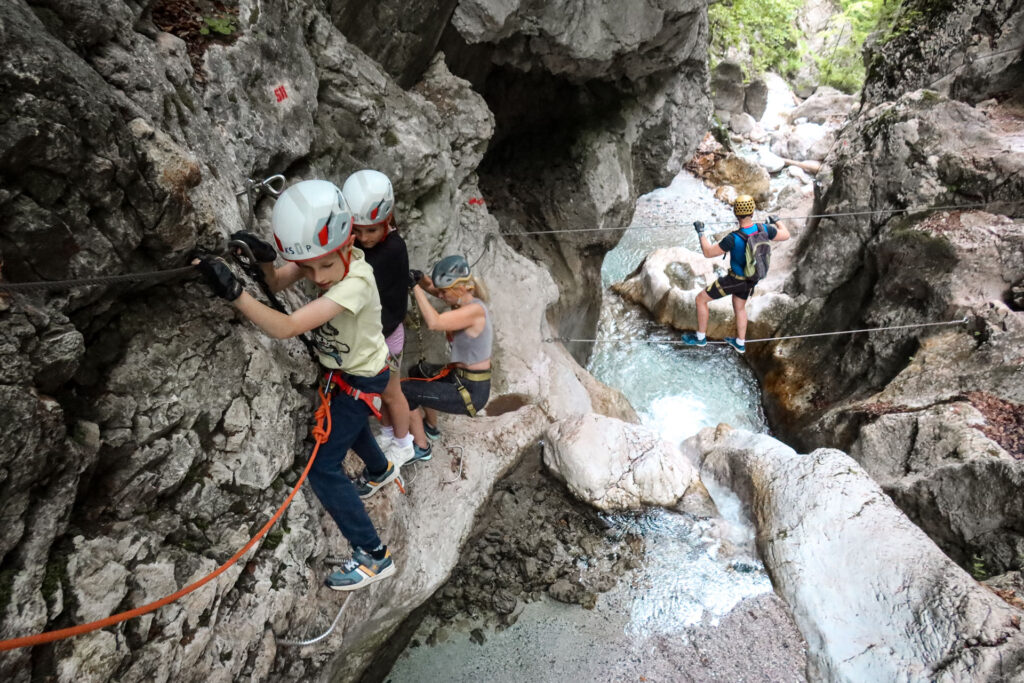
- Sport via ferrata: Mandatory use of full via ferrata set, including harness, via ferrata lanyard set (with special carabiners and elastic straps), helmet, and often gloves for grip and protection.
- Protected mountain trail / classic via ferrata: Equipment not always required. For more demanding routes, a helmet and via ferrata set are recommended, especially for less experienced hikers.
3. DIFFICULTY
- Sport via ferrata: Classified on grading scales (e.g., A–F), indicating technical and physical challenges. Often steep, vertical, with overhangs or suspension bridges.
- Protected mountain trail / classic via ferrata: Varying levels (easy, demanding, very demanding), but generally less technically and physically challenging than sport via ferratas.
4. TECHNICAL ELEMENTS
- Sport via ferrata: Consists of continuous artificial elements (steel cables, rungs, pins, ladders). These are essential for movement – without them, the ascent is usually impossible.
- Protected mountain trail / classic via ferrata: Technical aids (cables, iron pins) are present only on critical sections. Most of the route is walkable.
5. SAFETY LEVEL
- Sport via ferrata: Intended for more experienced or well-prepared climbers. Continuous protection is required, since a fall carries very high risk.
- Protected mountain trail / classic via ferrata: Suitable for a wider circle of hikers, but caution and extra equipment are still recommended on harder routes.
6. ACCESSIBILITY
- Sport via ferrata: Usually located in alpine areas. Approaches are shorter and adapted to climbers, with established descent routes.
- Protected mountain trail / classic via ferrata: Part of the wider mountain trail network, often connected to other routes. Approaches are longer and more suitable for hikers.
Examples of Protected Climbing Routes / Classic Via Ferratas and Sport Via Ferratas
Protected climbing route on Prisank (Kopiščarjeva pot)
- Characteristics: A demanding protected mountain trail with stunning views of Triglav and the surrounding peaks. The route passes by Prisank’s Window (Okno na Prisojniku), the largest natural rock window in Slovenia.
- For whom: Experienced mountaineers.
- Special feature: A dramatic alpine setting and proximity to natural landmarks such as the Ajdovska deklica(Heathen Maiden).
Sport via ferrata Mojstrana
- Characteristics: A pleasant ferrata with two route options (easier and harder), ideal for beginners.
- For whom: Families and beginners.
Special feature: Two difficulty levels, both leading to a scenic summit.
Protected Climbing Route on Mojstrovka (Hanza Route)
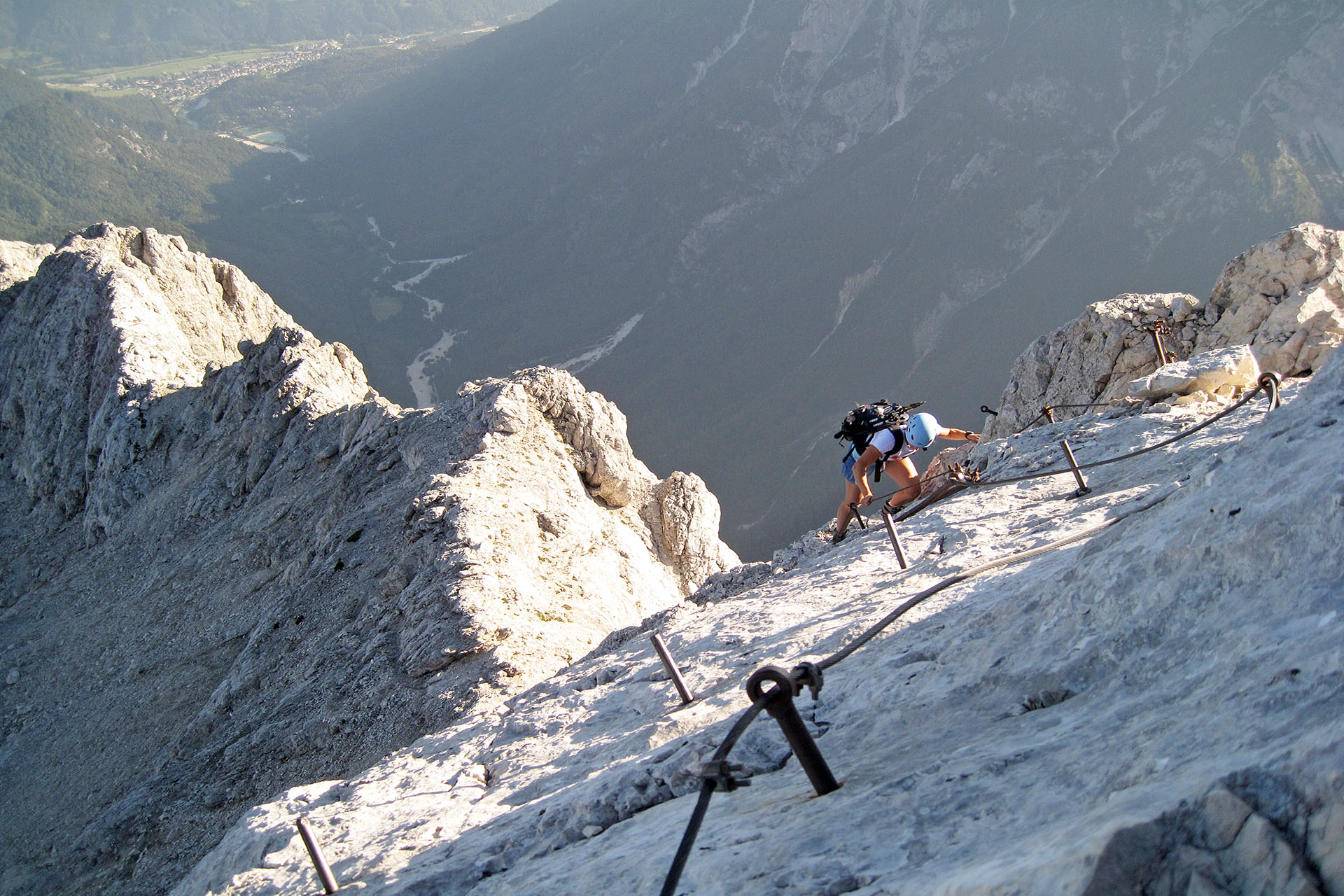
- Characteristics: The protected trail leads to Velika Mojstrovka and includes steep sections with iron pegs and steel cables. The route is well known for its exposure.
- For whom: Experienced mountaineers with some climbing skills.
- Special feature: Panoramic views of Jalovec, Triglav, and the Italian side of the Julian Alps.
Sport Via Ferrata Jerman
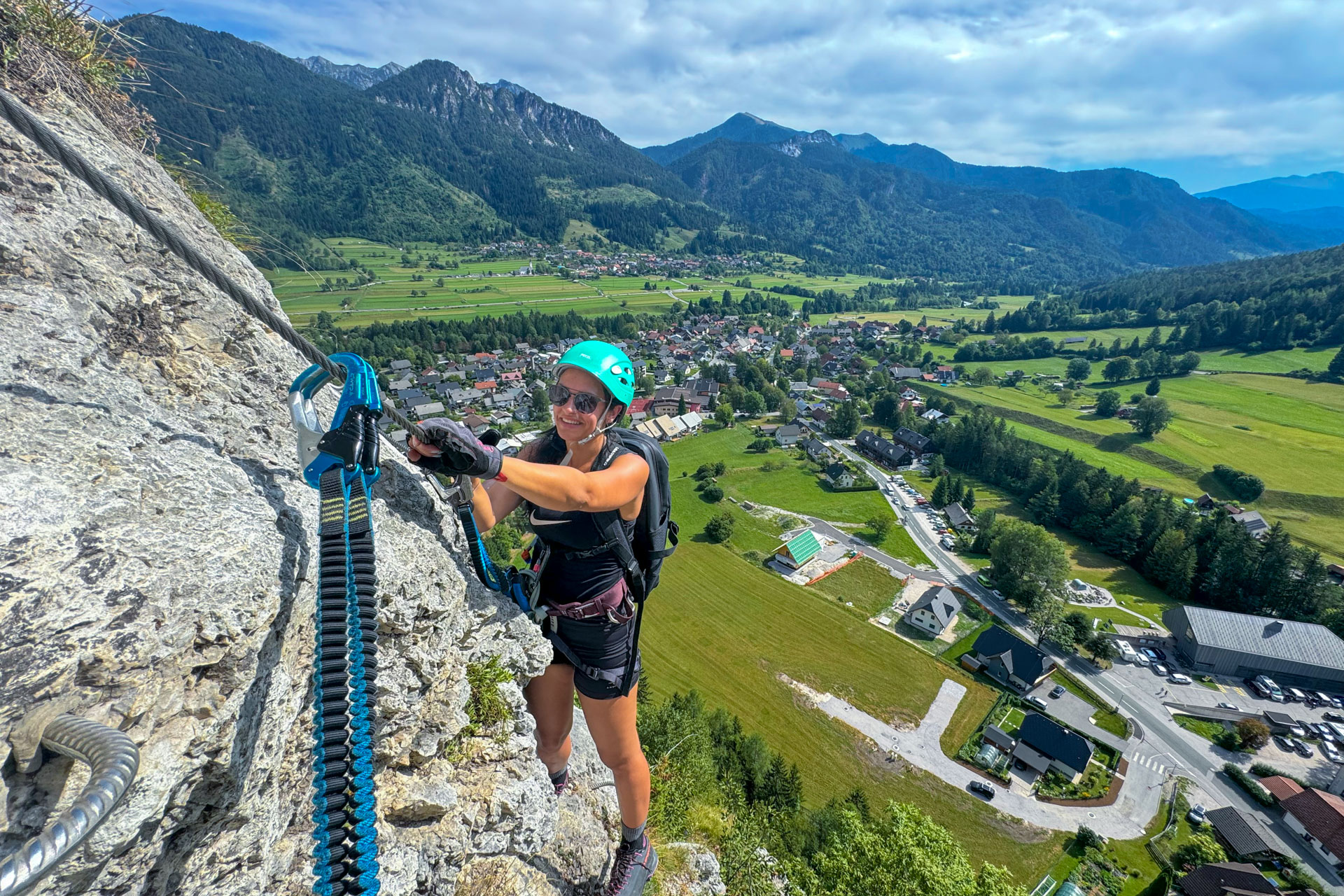
- Characteristics: A demanding ferrata with exposed overhangs and technically challenging sections. It requires solid physical fitness from visitors.
- For whom: Climbers with experience and good physical condition.
Special feature: An intense climbing experience with views over the Upper Sava Valley.
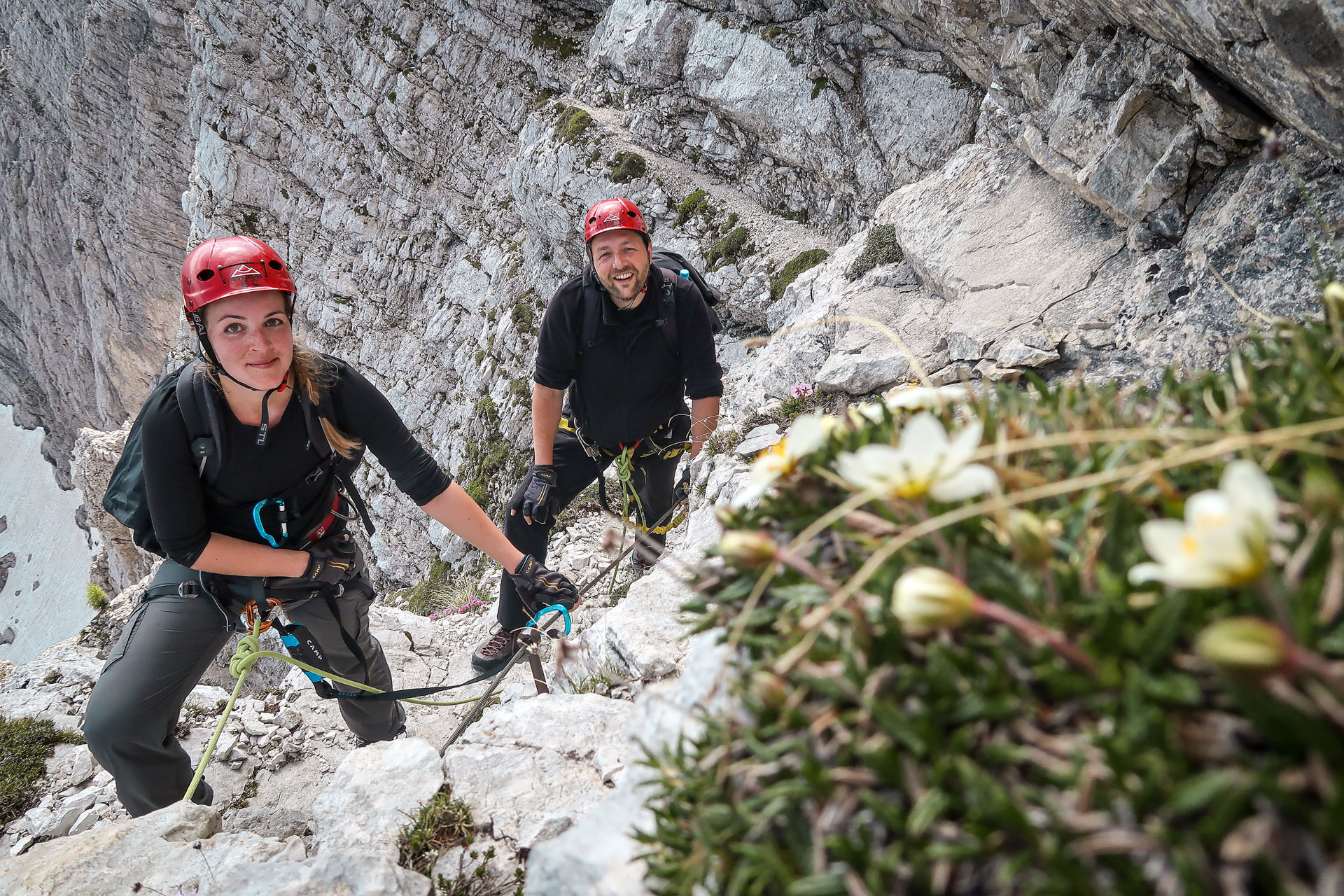
Protected Climbing Route on Veliki Vrh (Košuta)
- Characteristics: Classified as a demanding route, it includes protected sections with steel cables and iron pegs that allow passage through steeper and more exposed parts. The trail leads through the southern walls of Košuta and offers a varied experience.
- For whom: Suitable for experienced mountaineers with basic climbing skills who are accustomed to using protective equipment.
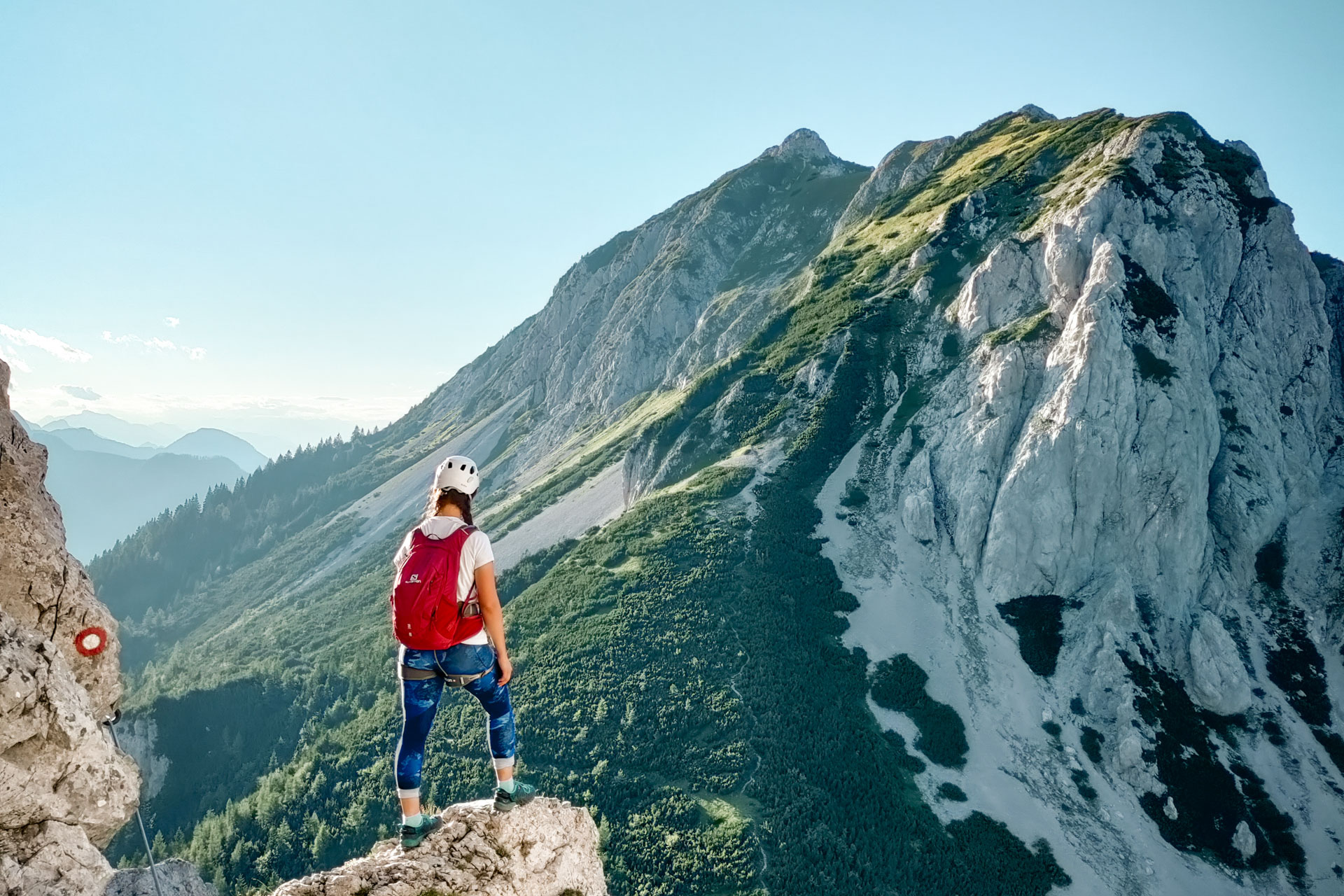
- Special feature: Beautiful views open up towards Slovenia’s Gorenjska region and Austria’s Carinthia. The ridge trail provides a striking sense of openness. Veliki Vrh is also an excellent starting point for exploring the rest of the Košuta ridge.
Sport Via Ferrata Hvadnik
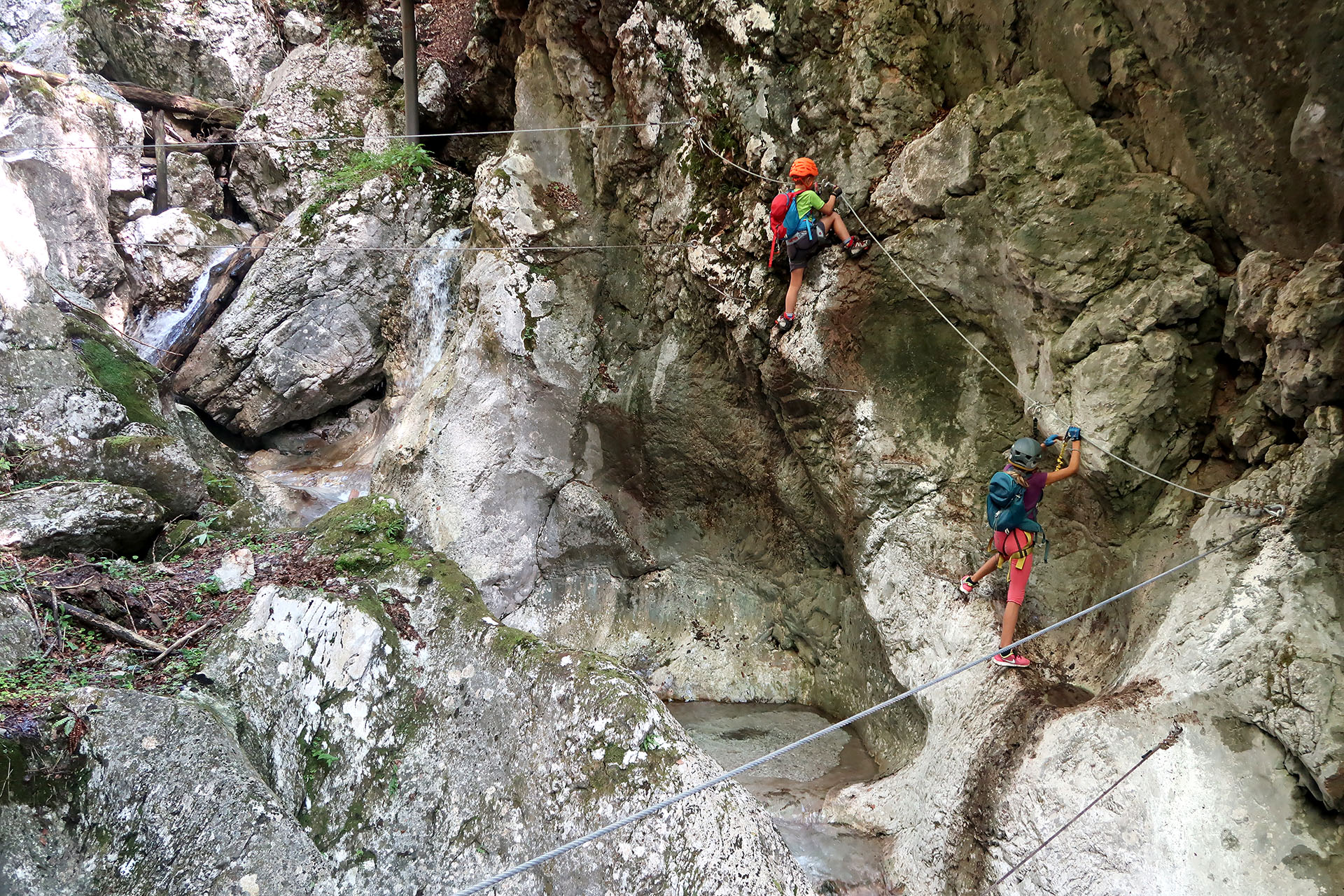
- Characteristics: A ferrata set in the Hladnik stream canyon, offering an unforgettable experience.
- For whom: Families with older children.
- Special feature: A unique climb along the stream and stunning views of the Julian Alps from the top.
No matter whether we choose a sport via ferrata or a protected climbing route / classic via ferrata, the goal is always the same: to enjoy nature, overcome personal challenges, and return home safely with unforgettable memories. As an old Slovenian saying goes: “It is not the mountain we conquer, but ourselves.”
May the Slovenian mountains be an inspiration and a source of joy on your next adventure!
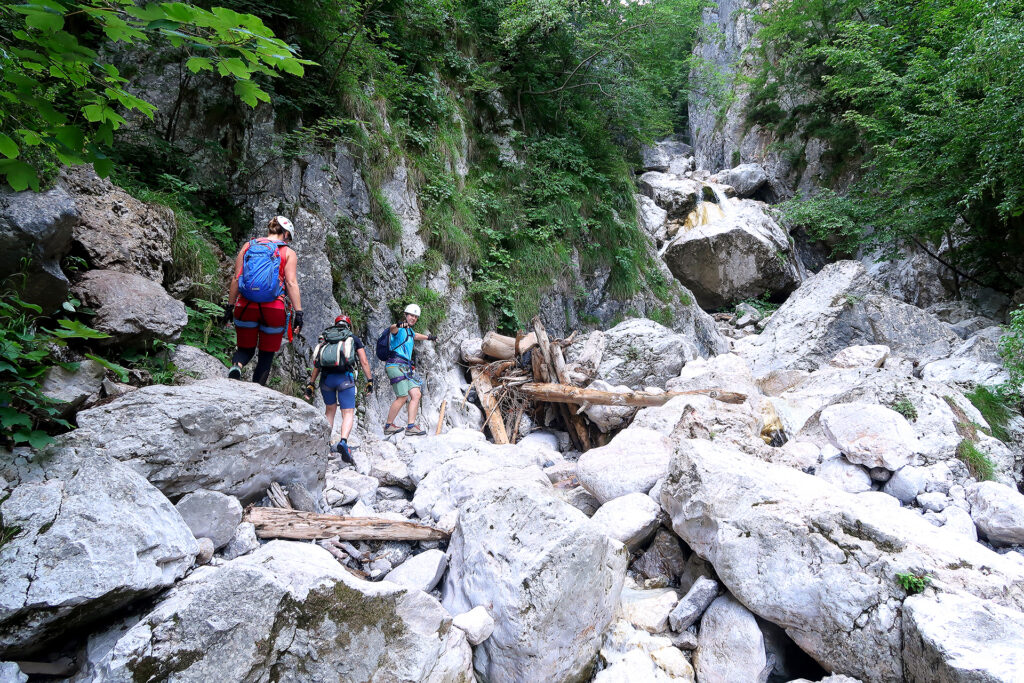
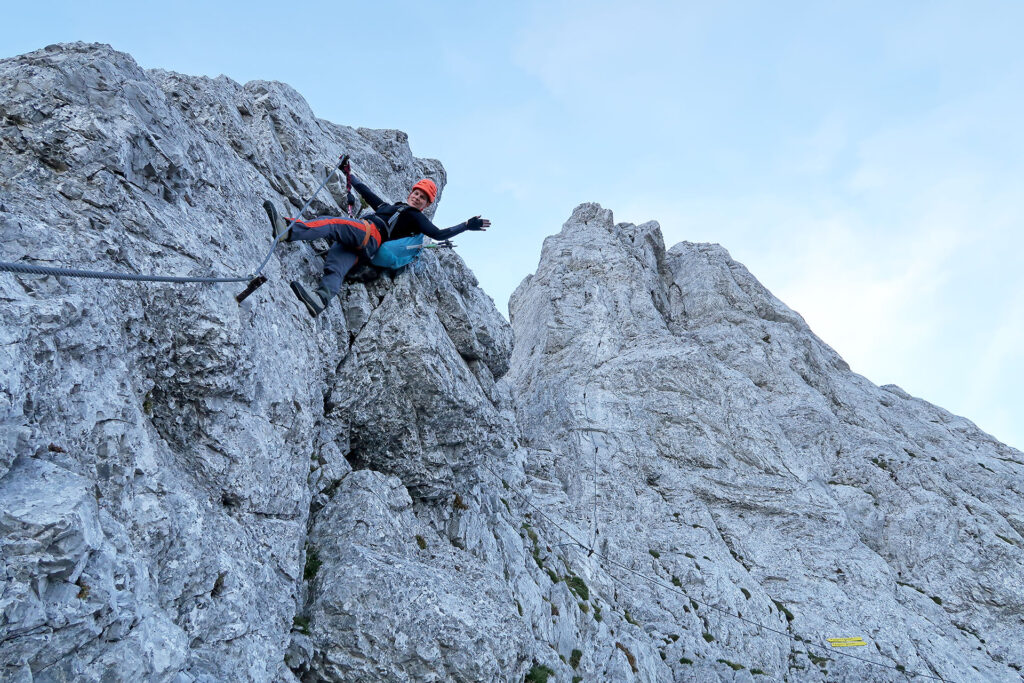
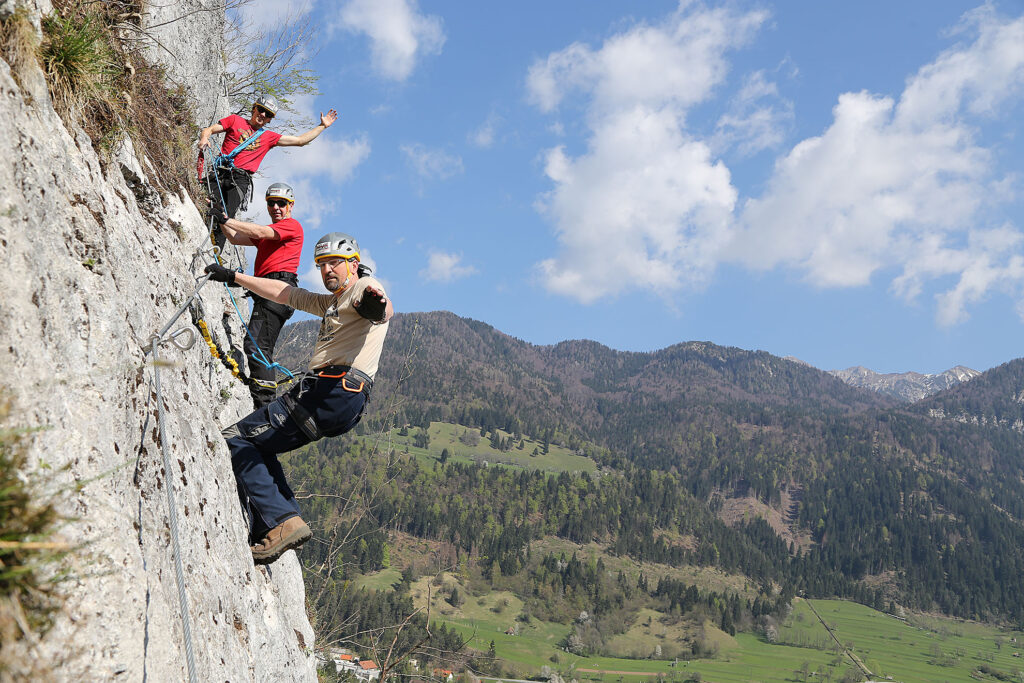
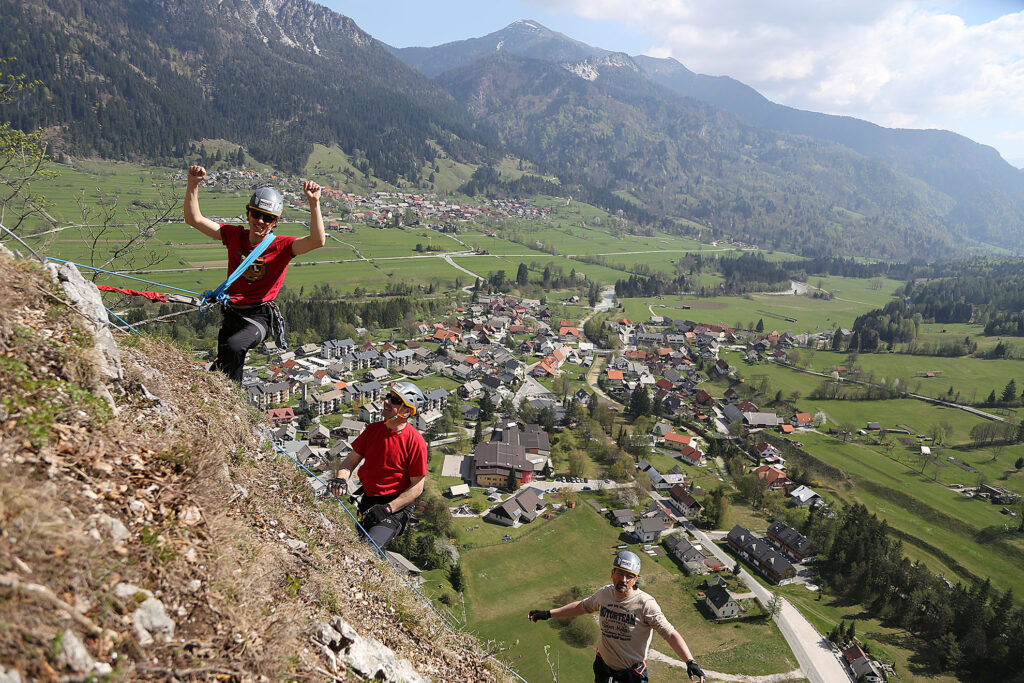
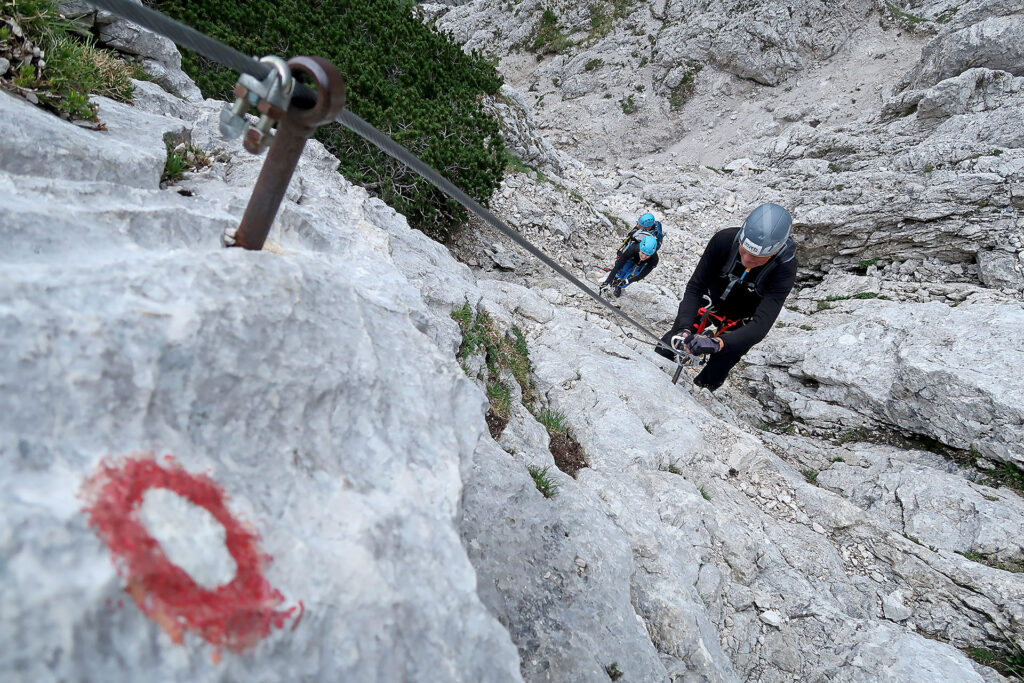
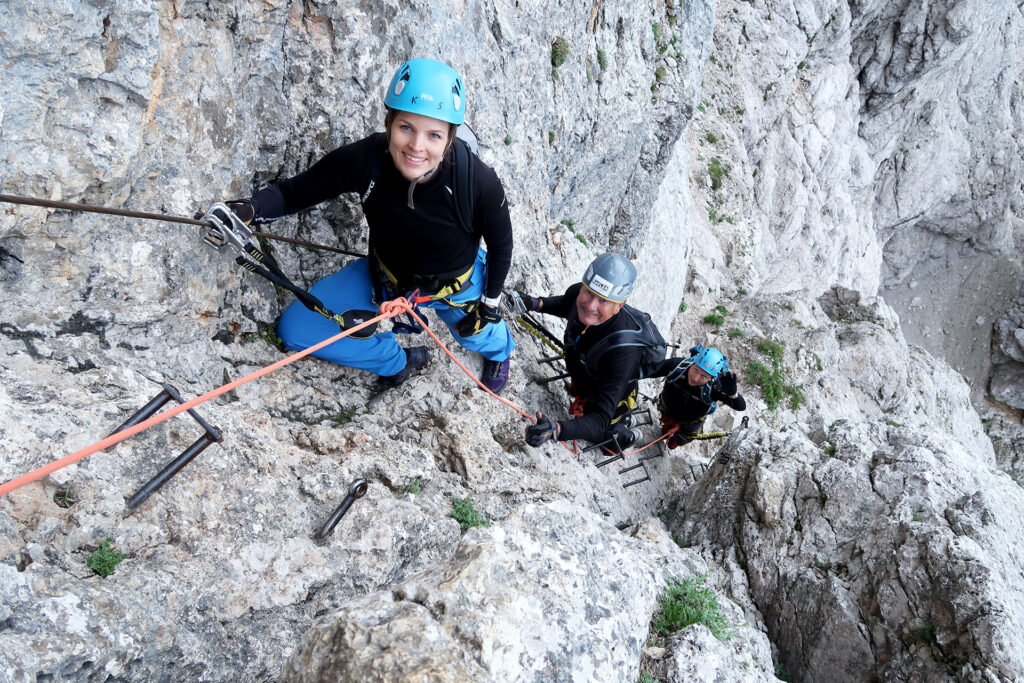
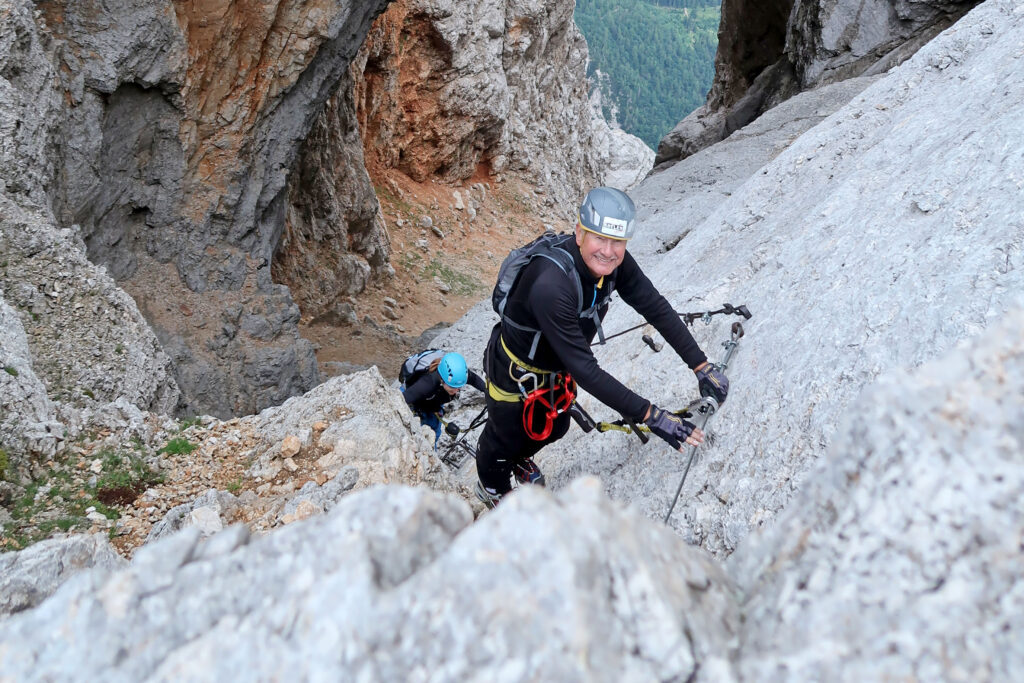

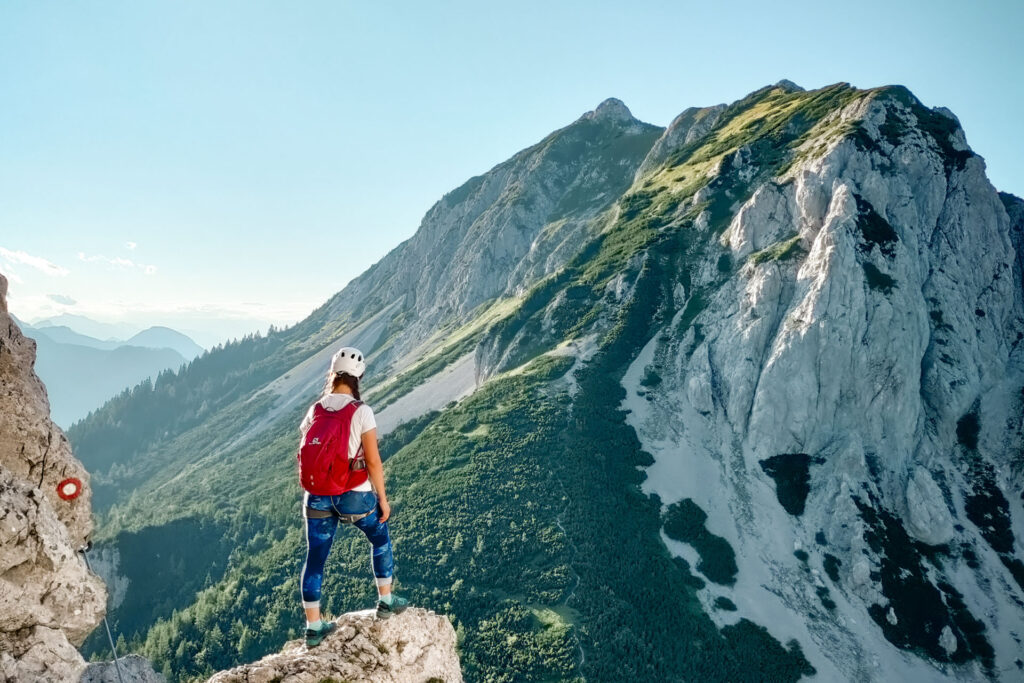
Would you like to join us next time we head to a via ferrata or a protected climbing route?
Make sure to spend your free time actively – an unforgettable adventure awaits you.
The number of spots and available dates is limited, so don’t delay your registration!
Related content
Check out the rest of the offer
Our contact
You can also call us or send us an e-mail for more information.